
Understand audiences
Run a moderated AI Focus Group
Run a moderated session against an editable discussion guide and get findings that quote what was actually said.
- Participants
- 4–12 Workers
- You get
- Themes and verified quotes
What makes it different
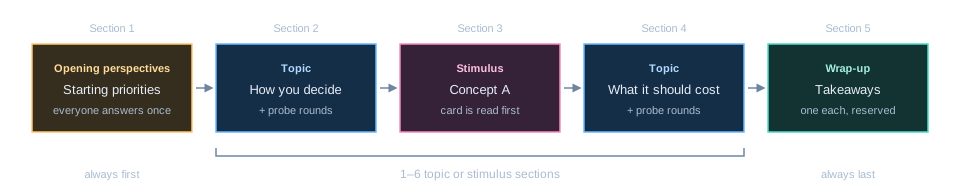
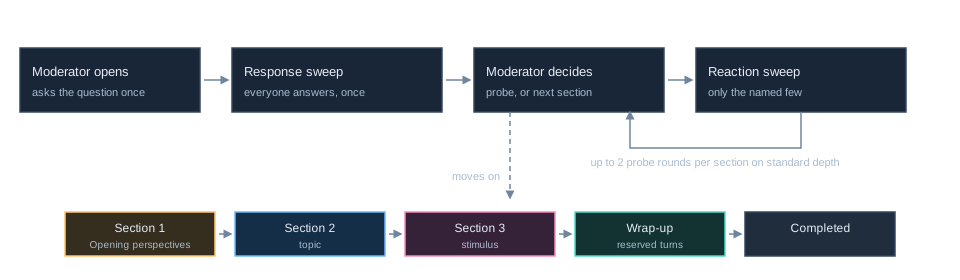
Opening perspectives first and a wrap-up last, with sections in between; everyone answers a section once, then the moderator either probes the named few or moves on. Airtime is computed on the server.
Where it stops
The panel is generated, not recruited. Nothing here is qualitative research on real participants.
Focus Group
How a session is paced
A moderated session has a running order, and in a Focus Group that order is a structure the run enforces rather than a suggestion in a prompt. An opening perspectives section always comes first and a wrap-up always comes last, with one to six topic or stimulus sections in between.
Inside a section the shape is fixed: the moderator asks once, everyone answers once, and then the moderator either probes — putting a follow-up to the named few, not to the room — or moves on. Depth caps the probing, so a section cannot run away with the budget of the ones after it.
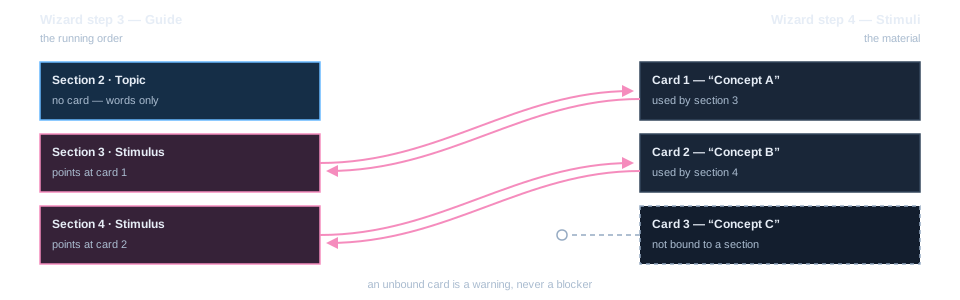
Stimulus material is bound to the section that uses it. A card nobody points at is flagged as a warning rather than blocking the run: the session still starts, and you still find out before it does.
Explore the other formats
- Multi-Agent Team DebateRun two saved AI Teams through private preparation, structured public debate, and a neutral five-dimension scorecard with a reasoned verdict.
- AI Pitch EvaluationEvaluate a pitch with 2–4 independent AI judges who open cold, cross-examine the case, and produce a cited scorecard and verdict.
- Synthetic Audience SimulationSimulate audience reactions with 12–50 generated participants, isolated baselines, networked rounds, descriptive metrics, and an Observer report.