
Evaluate and choose
Evaluate a pitch with independent AI judges
Take a pitch in front of a panel that opens cold, cross-examines what it heard, and closes without hearing the other closings.
- Participants
- 2–4 Workers
- You get
- Cited scorecard and verdict
What makes it different
You say what is being judged — investment, partnership, a purchase, the idea itself, launch readiness — and each Shark scores it independently against that, never seeing another Shark’s private brief.
Where it stops
The panel is playing investors. It is not diligence, and it is not an offer.
Shark Tank Pitch
What a participant is handed
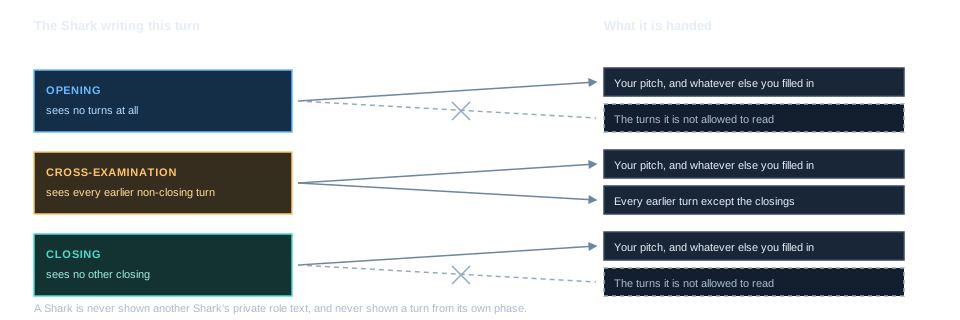
A panel that has read everything before it speaks is a panel that agrees with itself. The Shark Tank pitch takes the transcript away from the phases where it would do damage.
An opening sees no turns at all — just your pitch and whatever else you filled in — so the first reactions are genuinely independent. Cross-examination is the phase that gets the room: every earlier turn except the closings. And a closing sees your pitch and the cross-examination, but never another closing, so the last word is not simply the previous last word agreed with.
A Shark is also never shown another Shark’s private role text. What makes one of them sceptical about unit economics stays theirs.
Explore the other formats
- AI Focus Group SoftwareRun a moderated AI Focus Group with 4–12 generated participants, an editable discussion guide, and findings built from themes and verified quotes.
- Multi-Agent Team DebateRun two saved AI Teams through private preparation, structured public debate, and a neutral five-dimension scorecard with a reasoned verdict.
- Synthetic Audience SimulationSimulate audience reactions with 12–50 generated participants, isolated baselines, networked rounds, descriptive metrics, and an Observer report.