
Evaluate and choose
Run two AI Teams through a judged debate
Two saved Teams take opposite sides of the same question and defend them in a fixed public sequence.
- Participants
- 2 saved Teams + neutral Arbiter
- You get
- Five-dimension scorecard and verdict
What makes it different
Every member prepares privately first and only the spokespersons speak in public, so the scorecard measures the cases — construction, evidence, rebuttal, consistency, delivery — and not who talked most.
Where it stops
Both sides are assigned their position. A Team winning the round does not make its position the true one.
Team Battle
Two Teams. One motion. A reasoned verdict.
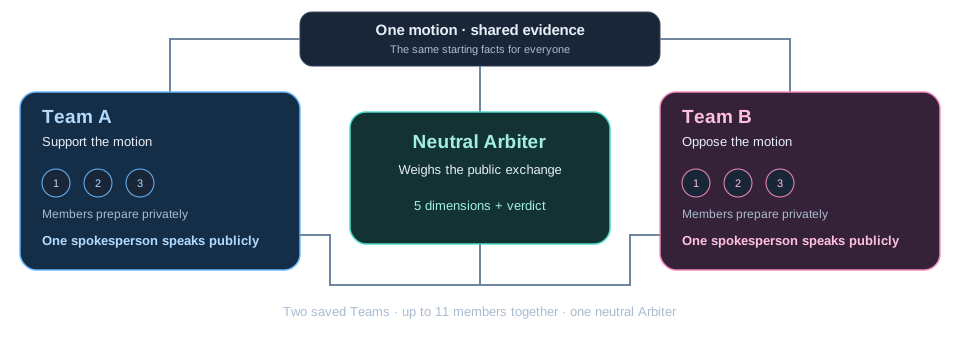
Give two saved Teams opposing positions on a concrete decision — for example, whether to launch a weekly newsletter before expanding paid ads. Both sides receive the same facts and evidence, while each Team keeps its own members, models and working style.
Each Team prepares privately before its spokesperson opens the public debate. Questions, answers and rebuttals put the two cases under pressure; closing statements give each side a final chance to make its case.
A neutral Arbiter, who sits on neither Team, scores five dimensions and delivers a verdict with reasons. The public transcript and scorecard show where each argument held up. A win judges the cases presented; it does not prove that a proposal will succeed.

Explore the other formats
- AI Focus Group SoftwareRun a moderated AI Focus Group with 4–12 generated participants, an editable discussion guide, and findings built from themes and verified quotes.
- AI Pitch EvaluationEvaluate a pitch with 2–4 independent AI judges who open cold, cross-examine the case, and produce a cited scorecard and verdict.
- Synthetic Audience SimulationSimulate audience reactions with 12–50 generated participants, isolated baselines, networked rounds, descriptive metrics, and an Observer report.